 Save
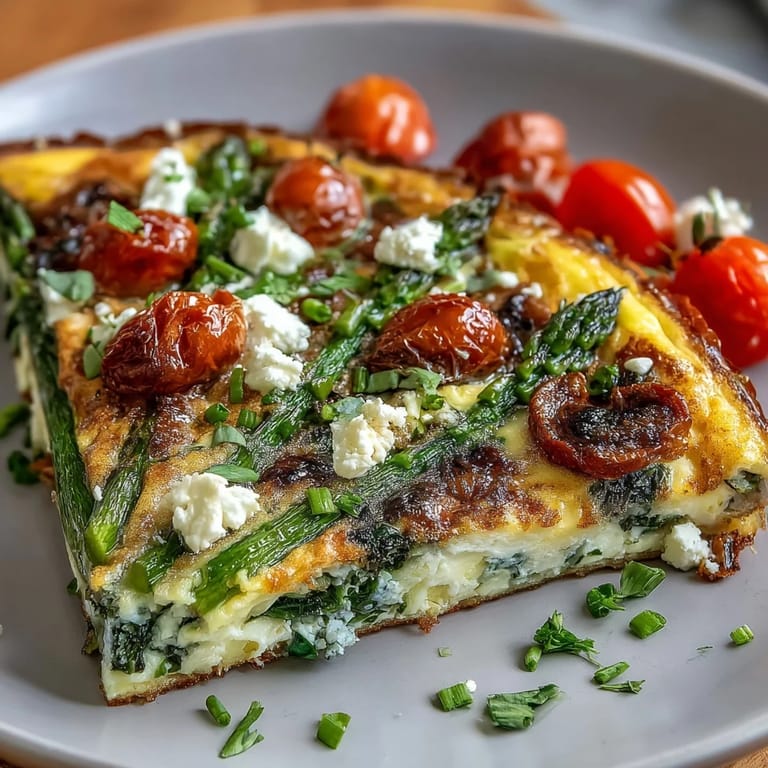
Save There's something about a spring morning that demands eggs cooked with whatever the farmers market just handed you. I'd wandered in on a Saturday with no real plan, came home with a bundle of asparagus that smelled like fresh rain and a handful of cherry tomatoes so bright they seemed to glow in my kitchen. That afternoon, I threw them into a skillet with some eggs and feta, and what emerged was this golden, herb-scattered frittata that felt less like cooking and more like capturing springtime itself on a plate.
My neighbor once asked what smelled so good wafting over the fence, and I realized mid-sentence that I'd never really noticed the aroma of a frittata baking until someone else did. Now whenever I make it, I think about how something so simple can fill an entire yard with that buttery, herb-touched warmth. It became the dish I'd bring to potlucks when I wanted to seem effortless, and somehow it always was.
Ingredients
- Asparagus: Trim the woody ends by bending each spear until it snaps naturally, then cut into bite-sized pieces that cook evenly and add that subtle spring earthiness.
- Baby spinach: The softer the better, since it wilts almost instantly and releases moisture that seasons the eggs from within.
- Cherry tomatoes: Halving them prevents them from rolling around and ensures their sweet juice distributes throughout the frittata.
- Zucchini: Dice it small enough that it softens fully during cooking, around the size of peas so texture stays consistent.
- Red onion: Finely chopped red onion adds color and a gentle bite that brightens everything without overpowering the vegetables.
- Eggs: Room temperature eggs blend more smoothly with the milk and create a creamier, more tender final texture.
- Milk: Any variety works, even dairy-free, but whole milk creates a slightly richer crumb than skim.
- Feta cheese: Crumbled feta delivers salty pockets of flavor that surprise you with each bite, and it's sturdy enough not to melt completely into the eggs.
- Fresh parsley and chives: These finish the dish with brightness, added right before serving so they stay vibrant green rather than turning dark from the heat.
- Olive oil: Good olive oil matters here since there's nothing heavy to hide behind, so use something you'd actually taste on salad.
Tired of Takeout? 🥡
Get 10 meals you can make faster than delivery arrives. Seriously.
One email. No spam. Unsubscribe anytime.
Instructions
- Heat your oven and warm the skillet:
- Set your oven to 375°F and let it preheat while you prep vegetables, so the skillet comes to temperature exactly when you need it. Using an oven-safe skillet means you're not fussing with transfers later.
- Build flavor from the bottom up:
- Heat olive oil and sauté the red onion first until it softens and turns translucent, about two minutes. The onion becomes a flavor foundation that everything else builds on.
- Cook the heartier vegetables:
- Add asparagus and zucchini with just a pinch of salt, which helps them release their moisture and cook faster, stirring gently for three to four minutes. You want them tender but not mushy, so they maintain a slight bite.
- Wilt the delicate greens:
- Stir in spinach and cherry tomatoes and let them soften for about a minute until the spinach turns from bright green to darker and releases its liquid. This happens faster than you'd expect, so stay close and watch.
- Combine eggs and dairy:
- Whisk eggs with milk, salt, black pepper, and red pepper flakes in a bowl until the mixture is pale and foamy, which incorporates air and creates a lighter texture. Don't skip the whisking, as it makes a real difference.
- Pour and distribute:
- Pour the egg mixture evenly over the vegetables, gently tilting the skillet so it settles into every corner. Sprinkle feta, parsley, and chives on top, spacing them so every slice gets some cheese and herbs.
- Start on the stovetop:
- Let the eggs cook on medium heat for two to three minutes until the very edges start to set and pull away from the pan sides slightly. You're not fully cooking them here, just getting them started.
- Finish in the oven:
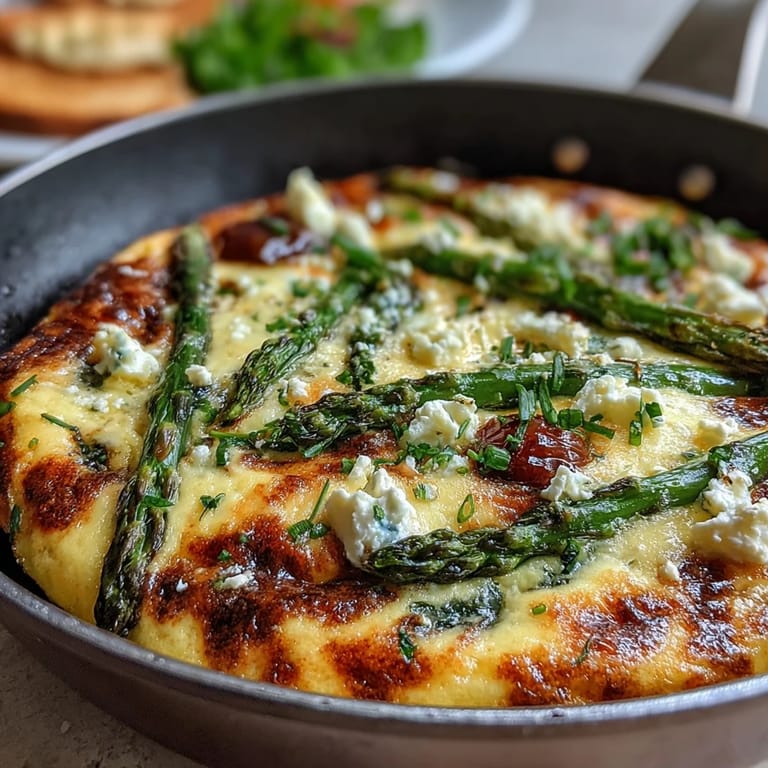
- Transfer the skillet to the oven and bake for ten to twelve minutes until the center barely jiggles when you gently shake the pan and the top is lightly golden. A frittata is done when it looks just slightly underdone, since carryover heat continues cooking it.
- Cool and serve:
- Let it rest for a few minutes so it sets just enough to slice cleanly into wedges without falling apart. It's wonderful warm straight from the oven or at room temperature hours later.
 Save
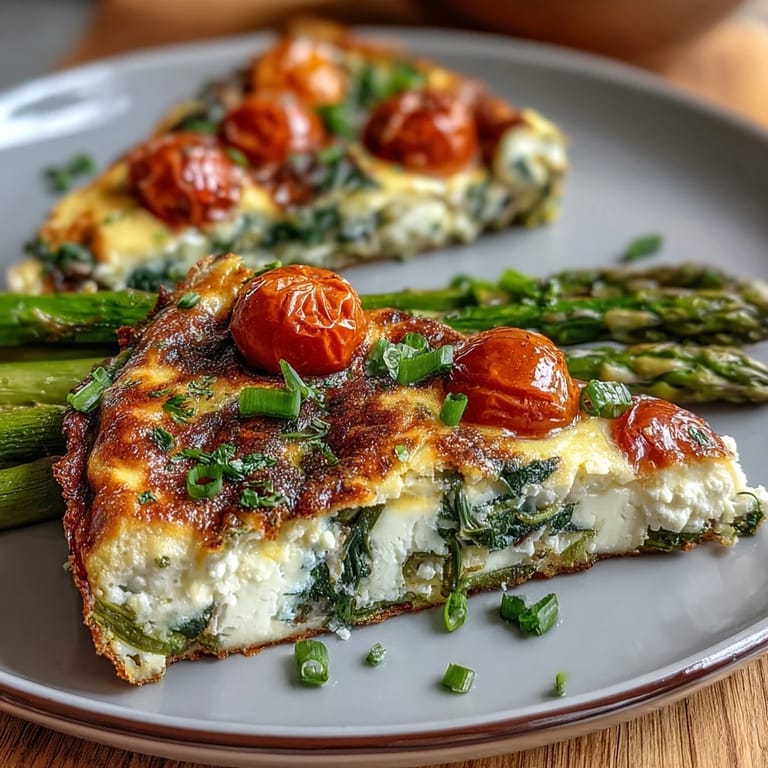
Save I once made this for a breakfast gathering where nobody knew each other yet, and somehow a frittata became the thing that loosened everyone up. People came back for seconds and thirds, and the conversation shifted from stiff to genuinely warm, all because this simple vegetable-filled egg dish had somehow done what small talk couldn't.
Why Spring Vegetables Matter Here
Spring vegetables are softer than their summer cousins, which means they cook quickly and release more of their natural juices into the egg mixture, seasoning it from the inside. Asparagus has that grassy, almost mineral quality that feels clean on the palate, while fresh spinach brings an earthy depth that cooking eggs alone never achieves. Cherry tomatoes burst slightly as they warm, releasing their seeds and juice into tiny pockets throughout the frittata. The whole combination tastes like the season itself decided to become breakfast.
Flexibility and Substitutions
This frittata doesn't demand fidelity to the ingredient list the way some dishes do. I've made it with snap peas instead of asparagus on weeks when the market looked different, thrown in fresh dill when parsley ran out, and once substituted crumbled goat cheese for feta because it was what I had. Each version tastes true to itself while staying recognizable as the same dish. The only real rule is not to crowd the pan with more than five cups of vegetables total, or you'll end up with more filling than eggs can bind.
Dairy-Free and Dietary Adjustments
Swapping milk for any non-dairy alternative creates essentially the same texture, and nutritional yeast adds a slight savory depth if you skip the feta. The eggs provide enough structure that the frittata sets perfectly either way, and honestly, some of my best batches have used oat milk by accident rather than intention. You lose a little richness without dairy, but you gain a lighter feel that actually lets the vegetables shine brighter.
- Plant-based milk works identically to dairy, though it can brown slightly faster in the oven.
- Nutritional yeast or cashew cream can stand in for feta's salty funk if that matters to your dietary needs.
- The whole dish remains naturally gluten-free, making it perfect for anyone avoiding grains.
 Save
Save This frittata has become the dish I reach for when I want something that tastes intentional but doesn't demand much of me. It's the kind of recipe that works whether you're cooking for yourself or feeding a crowd, warm from the skillet or cold from yesterday's fridge.
Recipe Questions & Answers
- → Can I substitute the feta cheese?
Yes, dairy-free cheese alternatives can be used to fit dietary preferences without sacrificing flavor.
- → What vegetables work best in this dish?
Spring vegetables like asparagus, spinach, zucchini, and cherry tomatoes complement the dish well, but peas or leeks can also be used.
- → How is the dish cooked for best texture?
Vegetables are sautéed until tender, then combined with whisked eggs and baked until just set and lightly golden for a fluffy texture.
- → Is this suitable for a gluten-free diet?
Yes, the frittata is naturally gluten-free, using only fresh vegetables, eggs, and cheese.
- → What is a good pairing with this dish?
It pairs well with a mixed green salad, crusty bread, or a crisp Sauvignon Blanc for a balanced meal.