 Save
Save My first Korean beef bowl came together by accident on a Tuesday night when I had ground beef, gochujang, and rice in my kitchen but nothing else planned. I mixed them on instinct, layering in pickled vegetables from a jar I'd forgotten about, and somehow created something so satisfying that my partner asked for it every week after. The magic wasn't in following a recipe perfectly, it was in discovering how gochujang could turn simple ingredients into something vibrant and alive on the plate.
I made this bowl for friends during a casual weeknight dinner, and watching them mix everything together at their own pace felt oddly intimate, like we were all discovering the same flavor at slightly different moments. Someone commented that it tasted restaurant-quality but felt homemade, which stuck with me because that's exactly what this bowl is meant to be.
Ingredients
- Lean ground beef (1 lb): Choose beef with some marbling rather than the leanest option, as it contributes richness to the sauce and keeps the mixture tender instead of dense.
- Gochujang (3 tbsp): This Korean chili paste is the entire backbone of the dish, bringing heat, umami, and a subtle sweetness that store-bought sauces can't replicate.
- Vegetable oil (2 tbsp): A neutral oil helps everything cook evenly without competing with the other flavors.
- Garlic and ginger: These two are your flavor foundation, so don't skip mincing them fresh, as dried versions will leave you with a flat result.
- Soy sauce (2 tbsp): Use full-sodium soy sauce here, as the salt binds with the other seasonings and balances the heat from gochujang.
- Brown sugar (1 tbsp): This rounds out the spicy-salty profile and helps the sauce cling to the beef.
- Rice vinegar (1 tbsp for beef plus 1/2 cup for pickling): The acid brightens everything and prevents the sauce from feeling heavy or one-note.
- Toasted sesame oil (1 tsp): A small amount adds nuttiness and warmth, but too much will overpower the other ingredients.
- Green onions: These stay fresh and sharp when added after cooking, giving the finished dish a crisp finish.
- Quick-pickled vegetables (carrot and daikon radish): Pickling them in advance means they're tender-crisp and tangy by the time you need them, adding brightness to every bite.
- Cooked rice: White rice is traditional and lets the beef shine, but brown rice adds earthiness if you prefer.
- Cucumber and radish for serving: Keep these fresh and uncooked for a cooling contrast against the spiced beef.
- Kimchi (1 cup): The fermented funk and heat tie the whole bowl together and add probiotic complexity.
- Toasted sesame seeds: Toast them yourself if you can, as they'll be fresher and more fragrant than pre-toasted versions.
Tired of Takeout? 🥡
Get 10 meals you can make faster than delivery arrives. Seriously.
One email. No spam. Unsubscribe anytime.
Instructions
- Start the pickled vegetables first:
- Whisk rice vinegar, sugar, and salt in a small bowl until the graininess disappears, then toss in your julienned carrot and daikon radish. Let them sit while you cook everything else, and they'll transform into something tangy and tender.
- Build your flavor base:
- Heat vegetable oil in a large skillet until it shimmers, then add minced garlic and ginger, letting them sizzle for exactly one minute until the kitchen smells incredible. This short window releases their essence without burning them.
- Brown the beef with intention:
- Add ground beef and break it apart with a spoon as it cooks, letting it develop a light crust rather than staying clumpy. This takes about five to six minutes and makes the texture more interesting in the finished bowl.
- Coat everything with the sauce:
- Stir in gochujang, soy sauce, brown sugar, rice vinegar, and sesame oil, then let it bubble gently for two to three minutes until the sauce thickens and starts clinging to the beef. You'll know it's ready when the oil glistens on top and the smell becomes almost intoxicating.
- Finish and assemble:
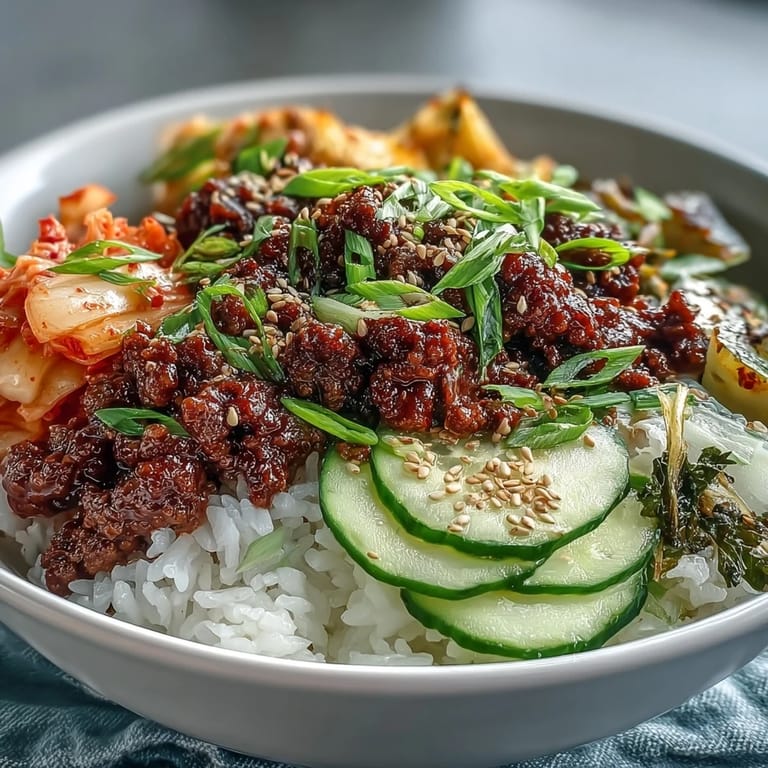
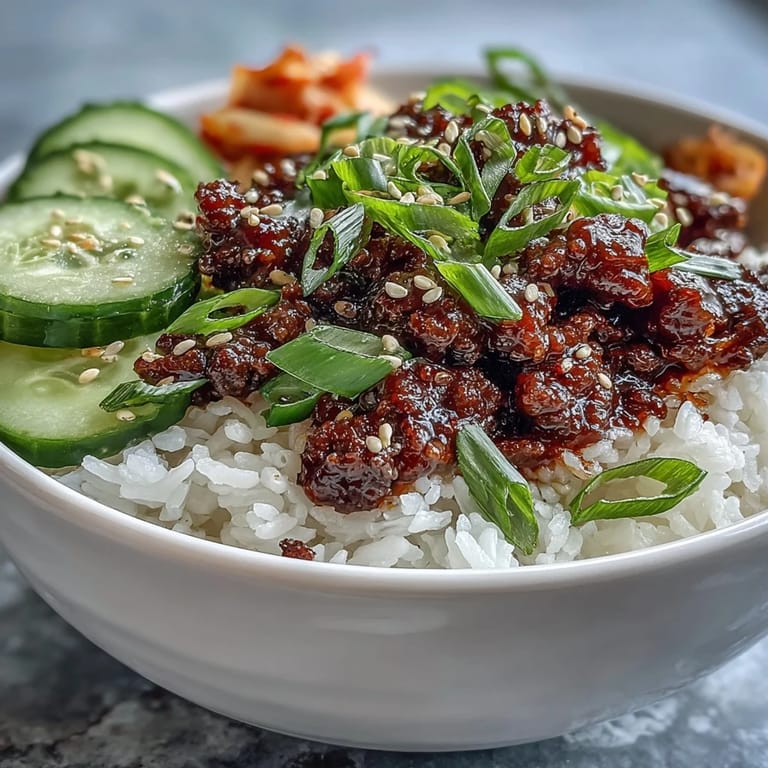
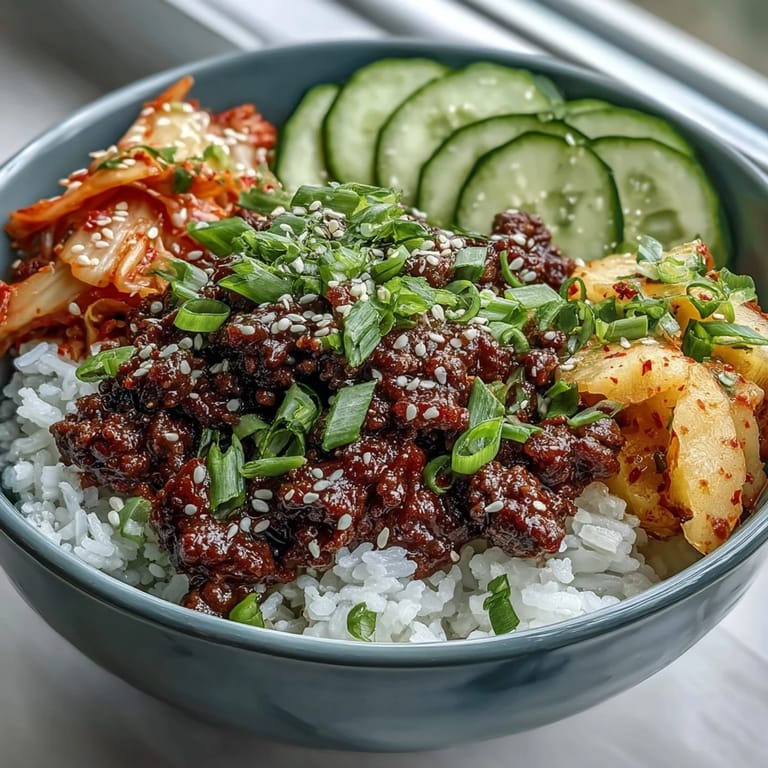
- Remove from heat, stir in half the green onions, then divide rice among bowls and top with the beef mixture. Arrange pickled vegetables, fresh cucumber, radish, and kimchi around the beef, then shower everything with sesame seeds and remaining green onions.
 Save
Save There was a moment when someone asked if I could teach them to make this, and I realized that this bowl had become something I wanted to pass along, not because it's complicated but because it represents discovering that restaurant flavors live in home kitchens too. That felt like the right reason to keep making it again and again.
Understanding Gochujang
Gochujang isn't just hot sauce, it's a fermented paste that brings heat, umami, sweetness, and depth to a dish in ways that sriracha or chili powder simply can't match. Once I realized this, I stopped treating it like a condiment and started treating it like the main seasoning, which completely changed how I approached the dish. Finding a good bottle matters, so look for one where gochujang is the first ingredient and explore Korean brands at specialty stores or online.
The Power of Quick Pickling
Quick-pickled vegetables seem fancy but they're honestly just vegetables sitting in vinegar and salt, and the magic happens because acid and salt soften the vegetables while adding brightness that balances spice. I started pickling everything once I understood this, from red onions to cucumbers, because the technique transforms raw vegetables into something that feels intentional and contributes to the entire flavor story. Even ten minutes of pickling time makes a noticeable difference, so you're not losing anything by preparing them in advance.
Customizing Your Bowl
This bowl thrives on flexibility, and I've made it with ground chicken when beef wasn't available, swapped in different vegetables based on what was fresh, and adjusted the spice level by adding or holding back on gochujang depending on who was eating. The structure stays the same, but the beauty is in making it yours rather than following it rigidly every time.
- For extra heat, drizzle sriracha or add another tablespoon of gochujang mixed into the sauce.
- Substitute ground turkey, chicken, or pork for beef, adjusting cook time slightly if needed.
- Use tamari instead of soy sauce and verify your gochujang is certified gluten-free for a completely gluten-free version.
 Save
Save Every time I make this bowl, I'm reminded that some of the best meals come from understanding a few simple techniques and ingredients, then building from there. It's become the kind of dish I make without thinking, which somehow makes it taste even better.
Recipe Questions & Answers
- → What does gochujang taste like?
Gochujang is a Korean chili paste with a complex flavor profile that's spicy, sweet, and savory with slight fermented notes. It adds depth and heat to the beef coating.
- → Can I make this bowl less spicy?
Reduce the gochujang to 1-2 tablespoons for milder heat. You can also add a teaspoon of honey or brown sugar to balance the spice level.
- → How long do the pickled vegetables keep?
The quick-pickled carrots and daikon will keep in the refrigerator for up to 1 week in an airtight container. They actually develop more flavor as they sit.
- → What other proteins work well in this bowl?
Ground chicken, turkey, or even crumbled tofu make excellent substitutions for the beef. Adjust cooking time accordingly as lean meats cook faster than beef.
- → Can I prepare components in advance?
The pickled vegetables can be made up to a week ahead. The beef mixture can be cooked and refrigerated for 3-4 days, then reheated gently before serving.
- → Is this dish gluten-free?
Use tamari instead of soy sauce and verify your gochujang is gluten-free, as some brands contain wheat. All other ingredients are naturally gluten-free.