 Save
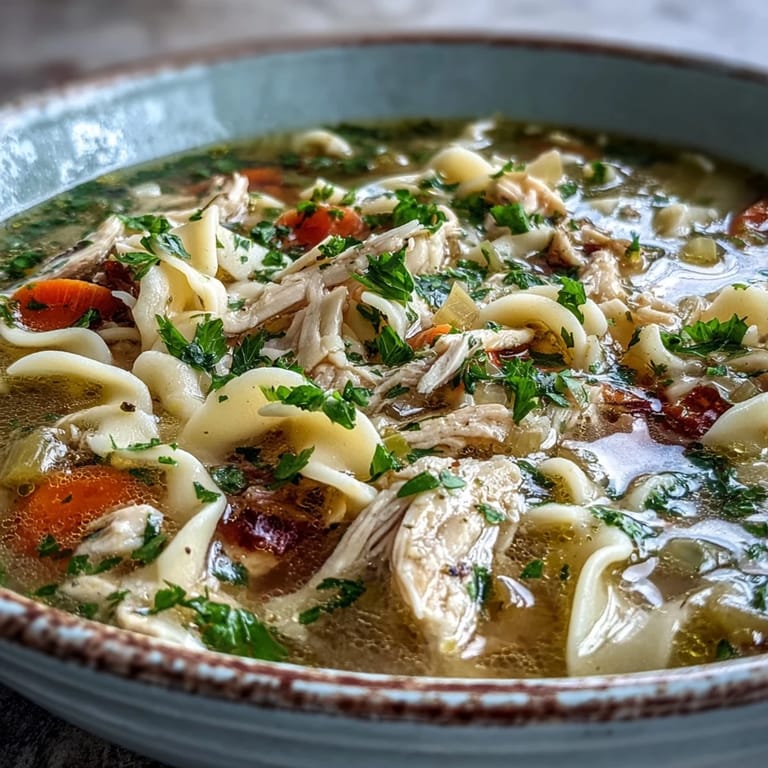
Save There's something almost magical about dumping ingredients into an Instant Pot and walking away, only to return to a pot of steaming chicken noodle soup that tastes like it simmered for hours. My first attempt at this was born from pure necessity—a Tuesday evening when I was exhausted and my kid asked for homemade soup instead of the canned stuff. Twenty minutes later, I was spooning bowls of golden broth loaded with tender chicken and silky noodles, and I haven't looked back since.
I made this soup for my neighbor when she came home from the hospital, worried it might feel too humble a gesture, but she called me three days later asking for the recipe. Her whole family had devoured it, and she wanted to make it herself. That's when I realized that simple, honest food shared with someone who needs it becomes something far more meaningful than its ingredient list suggests.
Ingredients
- Boneless, skinless chicken breasts or thighs (1 lb): Thighs stay more tender in the pressure cooker and have better flavor, but breasts work if that's what you have on hand.
- Medium onion, diced (1): This becomes almost invisible as it melts into the broth, adding sweetness and depth.
- Medium carrots, peeled and sliced (3): They soften beautifully under pressure and give the soup natural sweetness and color.
- Celery stalks, sliced (3): The holy trinity wouldn't be complete without it—celery is what makes the broth taste like actual home cooking.
- Garlic cloves, minced (3): Add these after the vegetables soften, or they can turn bitter in the high heat.
- Low-sodium chicken broth (8 cups): Use good quality broth here; it's the foundation of everything else.
- Dried thyme (1 tsp): This is my non-negotiable herb—it's what transforms soup from good to comforting.
- Dried parsley (1 tsp): Milder than fresh, it adds a subtle herbaceous note without overpowering.
- Bay leaf (1): Remove it before serving, but don't skip it—it adds an earthy note you can't quite identify but will definitely miss if it's gone.
- Black pepper and salt (1/2 tsp and 1 tsp): Season to taste at the very end; the broth concentrates during cooking.
- Egg noodles (6 oz): Don't add them until after the chicken is cooked, or they'll turn to mush.
- Fresh parsley, chopped (2 tbsp, optional): A sprinkle of this at the end makes it feel intentional and restaurant-quality.
- Olive oil (1 tbsp): Just enough to soften the vegetables in the sauté phase without making the soup greasy.
Tired of Takeout? 🥡
Get 10 meals you can make faster than delivery arrives. Seriously.
One email. No spam. Unsubscribe anytime.
Instructions
- Sauté your vegetables into softness:
- Turn on Sauté mode and let the olive oil get warm, then add your onion, carrots, and celery. You'll hear a gentle sizzle, and after about three to four minutes, the vegetables should be just starting to soften at the edges. This step builds flavor through browning and removes the raw vegetable taste.
- Add the aromatics:
- Toss in your minced garlic and let it cook for just 30 seconds until the smell fills your kitchen—you'll know exactly when to move on because it'll smell incredible. Don't let it cook longer or it starts to taste burnt.
- Place the chicken on top:
- Lay your chicken breasts or thighs directly on top of the vegetable bed. They don't need to be completely submerged; the steam will do all the work.
- Build the broth base:
- Pour in your chicken broth and gently stir in the thyme, parsley, bay leaf, pepper, and salt. The liquid should mostly cover the chicken, though a bit of it peeking through is fine.
- Pressure cook the chicken:
- Lock the lid, set the valve to Sealing, and cook on High Pressure for 10 minutes. The pot will take a few minutes to come to pressure, and you'll hear a faint hissing sound when it's working.
- Release the pressure naturally, then quickly:
- Once the timer beeps, let the pot sit undisturbed for 5 minutes so the pressure releases slowly. Then carefully move the valve to Venting to release any remaining pressure—be careful of the steam.
- Shred the chicken:
- Remove the chicken to a clean plate using tongs or a fork. Using two forks, pull the chicken apart into bite-sized pieces. It should shred easily if it's cooked through.
- Cook the noodles in the broth:
- Switch back to Sauté mode and add your egg noodles directly to the hot broth. Stir occasionally and cook for five to six minutes until the noodles are tender but still have a bit of bite. Taste a noodle to check—there's nothing worse than mushy noodles.
- Bring it all together:
- Return the shredded chicken to the pot and stir everything together gently. This is when you taste and adjust the seasoning—add more salt, pepper, or a squeeze of lemon juice if it needs brightening.
- Finish and serve:
- Fish out the bay leaf and discard it, then ladle the soup into bowls. A small handful of fresh parsley on top makes it look intentional and tastes like you actually know what you're doing.
 Save
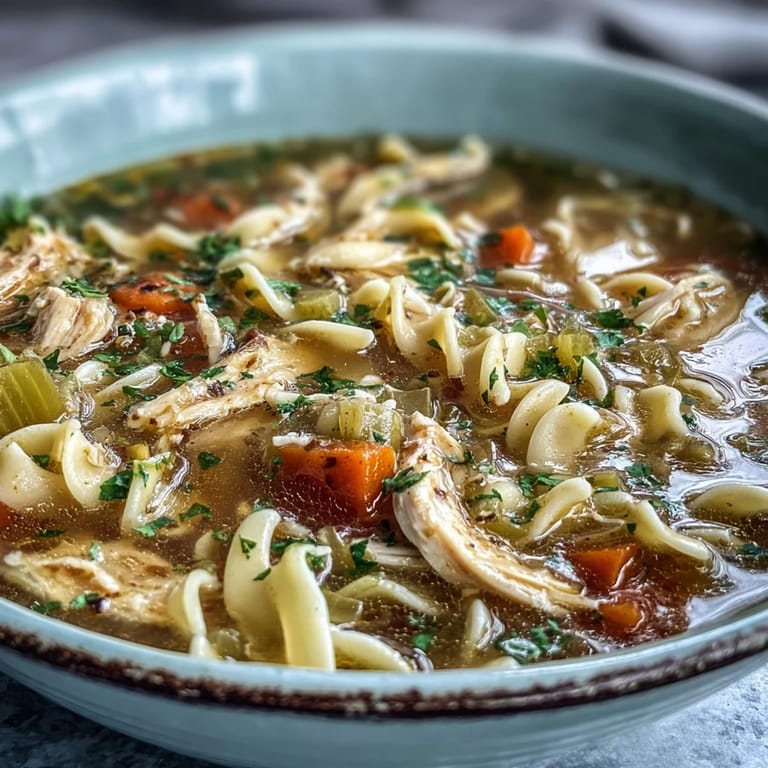
Save My daughter, who usually picks out every vegetable with surgical precision, actually asked for seconds of this soup without complaint. I watched her blow on a spoonful of broth and realized that sometimes comfort food does exactly what its name promises—it comforts, without needing to convince anyone.
Why This Works in the Instant Pot
The Instant Pot's pressure cooking is almost unfair in how efficiently it breaks down chicken while keeping it moist, and how it coaxes every bit of flavor out of the vegetables in a fraction of traditional stovetop time. The key is that high-pressure steam environment—it's like time-traveling your soup to flavor maturity in minutes.
Storage and Reheating
This soup keeps beautifully in the refrigerator for up to four days, and it actually tastes better the next day as the flavors continue to blend and deepen. Reheat it gently on the stove over medium heat, adding a splash of broth or water if it's gotten too thick.
Variations and Swaps
Once you master the basic version, you'll start seeing endless possibilities in your pantry. I've added spinach at the very end for color, swapped in orzo or ditalini pasta, and even thrown in frozen peas in the last minute of cooking.
- For speed, use rotisserie chicken and add it when you add the noodles—you'll cut 15 minutes off the total time.
- A squeeze of fresh lemon juice or a splash of white wine before serving adds a brightness that makes people pause and ask what's different.
- Gluten-free noodles work perfectly if you're cooking for someone with dietary restrictions, though they may soften faster so watch them closely.
 Save
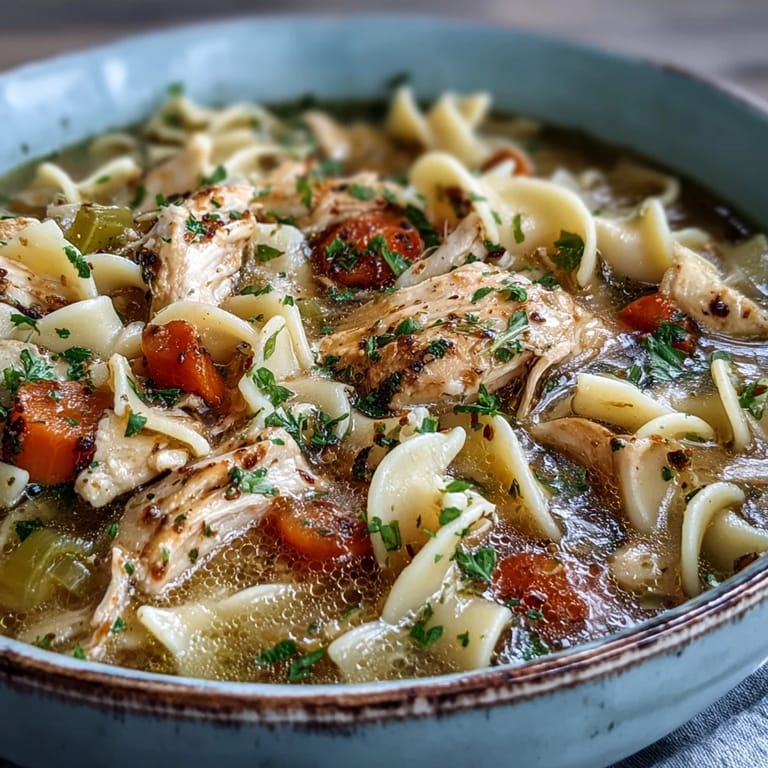
Save This is the soup you make when someone needs feeding, when you need feeding, or when the world feels a little too big and complicated. It's honest, it's reliable, and it always shows up.
Recipe Questions & Answers
- → Can I use frozen chicken for this soup?
Yes, you can use frozen chicken breasts or thighs. Simply add 3-5 minutes to the pressure cooking time to ensure the chicken cooks through completely.
- → What type of noodles work best?
Traditional egg noodles are ideal, but you can substitute with any short pasta like rotini, penne, or gluten-free alternatives. Adjust cooking time based on package directions.
- → How do I store leftover soup?
Store in an airtight container in the refrigerator for up to 4 days. Note that noodles will absorb liquid over time, so you may need to add extra broth when reheating.
- → Can I make this soup ahead of time?
Yes, prepare the soup without noodles and refrigerate. When ready to serve, reheat and add fresh noodles to prevent them from becoming mushy.
- → What vegetables can I add or substitute?
Feel free to add peas, green beans, corn, or potatoes. You can also substitute parsnips for carrots or add fresh spinach at the end for extra nutrition.
- → How can I make this soup creamier?
Stir in a splash of heavy cream, half-and-half, or coconut milk after cooking. You can also add a roux made from butter and flour during the final simmer.