 Save
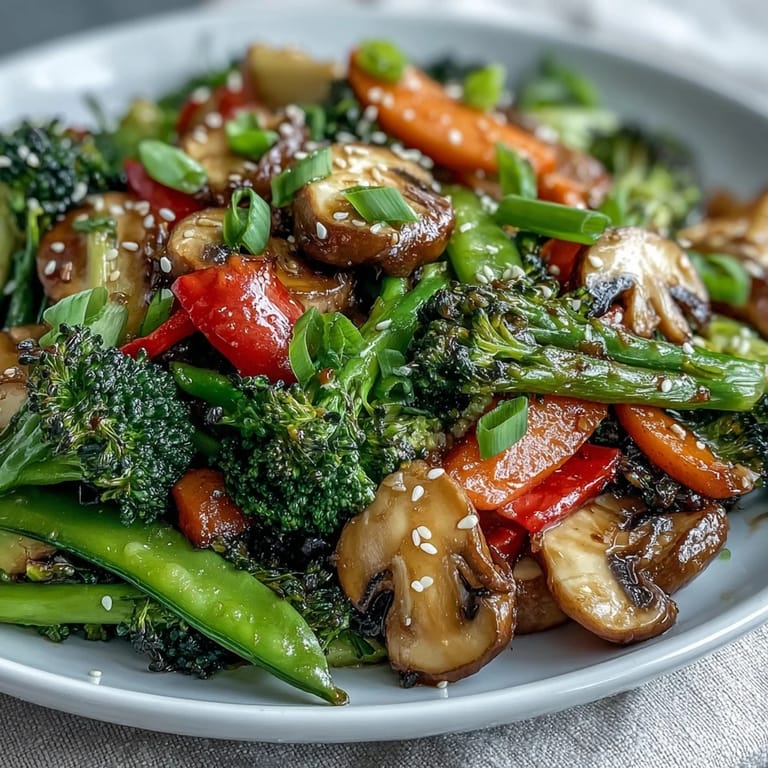
Save My kitchen smelled like a farmer's market the afternoon I first nailed this ginger stir-fry—not because I was trying to be fancy, but because I'd grabbed whatever looked freshest and realized halfway through chopping that ginger was the missing piece tying everything together. The heat from that wok and the sharp bite of fresh ginger transformed what could've been just another weeknight dinner into something I actually wanted to eat again. Now it's the recipe I reach for when I need to feel like I'm cooking something real in under thirty minutes.
I made this for my roommate on a random Thursday when she came home completely drained from work, and she actually sat down at the table instead of disappearing into her room like usual. Watching her try that first bite and then immediately take another—no hesitation, no checking her phone—that's when I knew this recipe was a keeper. Something about a warm, gingery stir-fry has this effect on people; it feels nourishing in a way that reaches past just your stomach.
Ingredients
- Broccoli florets: Use florets about the size of a walnut so they cook through in the time it takes everything else to get tender.
- Sliced carrots: Slice them thin on the bias so they catch the sauce and cook evenly without needing extra time.
- Red bell pepper: The sweetness balances the ginger's heat, and it adds a pop of color that makes the whole dish look alive.
- Snap peas: These stay crisp if you add them toward the end, which is the whole point—you want that snap when you bite down.
- Yellow onion: Slice it thin enough that it softens but keeps some structure; it becomes almost sweet in the hot pan.
- Sliced mushrooms: They absorb the sauce like little sponges and add an earthy note that deepens the whole flavor.
- Fresh ginger: This is non-negotiable—it's the soul of the dish, so grate it fresh and don't settle for jarred.
- Garlic: Mince it fine so it distributes evenly and toasts just enough to lose its raw edge in those first few seconds.
- Soy sauce: Use tamari if you need gluten-free; the umami is what makes this taste complete rather than just like hot vegetables.
- Sesame oil: A little goes a long way—it's aromatic and rich, so don't be tempted to add more than called for.
- Vegetable oil: This is your cooking oil because it has a high smoke point; sesame oil alone would scorch.
- Rice vinegar: It's mild compared to other vinegars, so it brightens without overwhelming the ginger's subtlety.
- Maple syrup or honey: Just a teaspoon rounds out the sauce and gives it a barely-there sweetness that makes the ginger shine.
- Red pepper flakes: Optional, but they add warmth that builds as you eat—leave them out if heat isn't your thing.
- Green onions: These are your final flourish—they add a fresh, sharp note right at the end that wakes everything up.
- Toasted sesame seeds: Toasting them yourself takes thirty seconds and makes them taste like something other than decoration; it's worth it.
Tired of Takeout? 🥡
Get 10 meals you can make faster than delivery arrives. Seriously.
One email. No spam. Unsubscribe anytime.
Instructions
- Make your sauce first:
- Whisk together soy sauce, rice vinegar, maple syrup, and red pepper flakes in a small bowl and set it aside where you can reach it—this takes the pressure off once your wok gets hot and things start moving fast.
- Get your pan screaming hot:
- Heat vegetable oil and sesame oil together over medium-high heat until the air above it shimmers slightly; this is when you know it's ready for the ginger.
- Bloom your aromatics:
- Add ginger and garlic and stir constantly for about thirty seconds—you'll smell when they're ready, that sharp aromatic smell that tells you they've opened up without browning.
- Start with the slow vegetables:
- Add onion, carrots, and broccoli and keep the heat high, tossing everything with a wooden spoon or spatula so each piece touches the hot pan. Cook for two to three minutes until the onion softens and the broccoli starts to turn a deeper green.
- Add the tender vegetables:
- Toss in bell pepper, snap peas, and mushrooms and keep stirring for three to four more minutes—the mushrooms will release their moisture and everything should still have some resistance when you bite it.
- Bring it all together:
- Pour your sauce over everything and toss until every vegetable is coated and glossy, then cook for one to two minutes more until the sauce gets a little syrupy and everything is heated through.
- Finish and serve:
- Take it off the heat, scatter green onions and toasted sesame seeds across the top, and taste it—adjust salt or heat as you go.
 Save
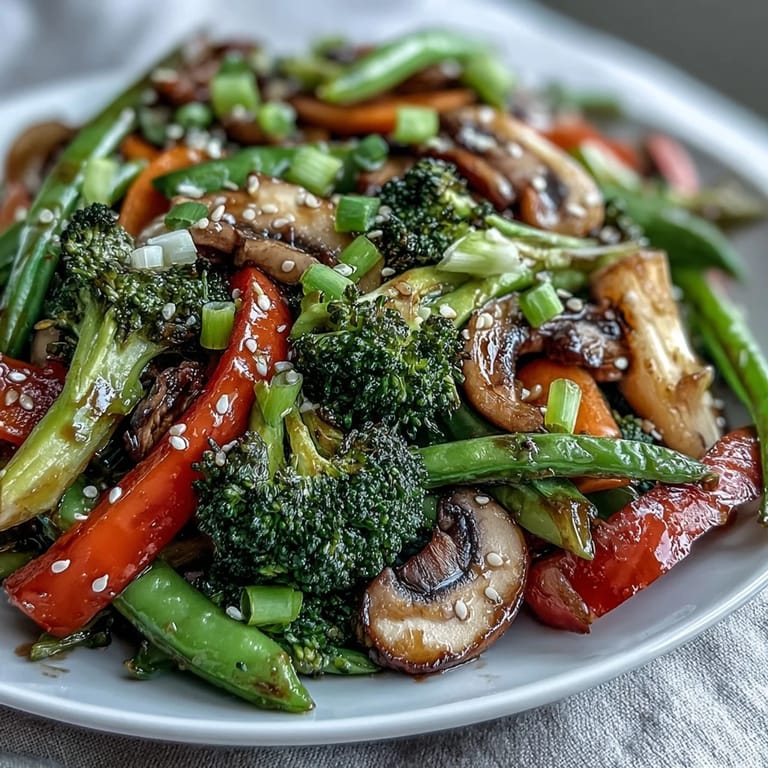
Save What gets me about this recipe is how straightforward it is—there's no sauce reduction, no complicated timing, nothing that requires actual culinary training—and yet it tastes like you know what you're doing. That's the thing I've learned to value most in cooking: efficiency that doesn't sacrifice flavor or the experience of making something that actually nourishes someone.
Why Fresh Ginger Changes Everything
The first time I used bottled ginger instead of fresh because I was in a hurry, the whole dish tasted flat in a way I couldn't quite place until my partner asked if I'd forgotten an ingredient. Fresh ginger has this bright, slightly spicy quality that jarred ginger loses somewhere in the preservation process—it's the difference between tasting ginger and tasting a memory of ginger. Since then, I keep a knob of ginger in my vegetable drawer specifically for stir-fries because that moment of recognition when you taste the real thing is worth the extra thirty seconds of grating.
Vegetables That Actually Stay Crisp
Most of my early stir-fry attempts ended up with vegetables that were soft all the way through, which meant I was either cooking too long or not managing the heat right—probably both. The secret turned out to be two things working together: keeping the heat genuinely high so things cook fast rather than steaming, and adding vegetables in stages based on how long they need. Broccoli and carrots go in first because they're denser, snap peas go in last because they're already tender and just need to warm through. Once you see how fast this actually works, you'll never go back to the slow-cooked version.
Building Flavor That Doesn't Come From Salt Alone
I used to think the only way to make vegetables taste interesting was to add more seasoning, but this sauce taught me that umami and subtle sweetness do the heavy lifting if you let them. Soy sauce brings the savory depth, rice vinegar adds brightness that makes flavors pop without tasting sour, and just a teaspoon of maple syrup rounds everything out into something that feels complete. The ginger and garlic aren't just seasonings—they're the actual star, the thing that makes you want another bite.
- Taste as you go and trust that a tiny amount of sweetness makes the whole thing feel more balanced.
- The sauce should smell warm and slightly sweet, not harsh or vinegary, before it even touches the vegetables.
- This ratio is a starting point—if you like things spicier or more savory, adjust it next time rather than mid-cook.
 Save
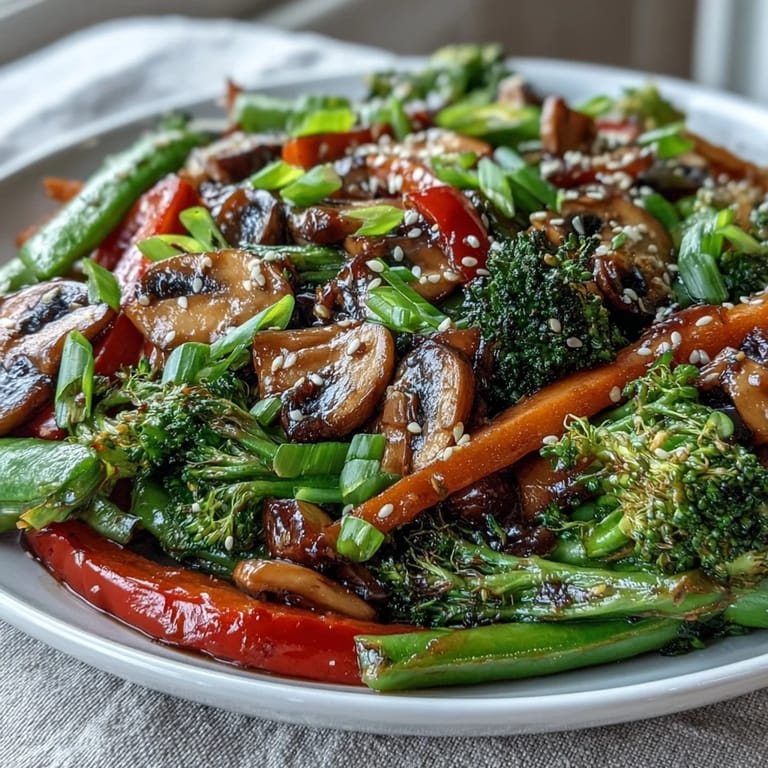
Save This recipe has become my go-to when I want to prove to myself that real food doesn't require fancy techniques or hours in the kitchen—just good ingredients treated with a little attention. Every time I make it, it tastes like exactly what I needed that day.
Recipe Questions & Answers
- → How do I keep vegetables crisp-tender?
Cook over medium-high heat and work in batches if needed. Add vegetables that take longer to cook first—carrots and broccoli need about 2-3 minutes, while bell peppers and snap peas only need 2 minutes. Resist the urge to overcook; they should still have a satisfying crunch when you bite into them.
- → Can I make this gluten-free?
Absolutely. Simply substitute regular soy sauce with tamari, which is naturally gluten-free. Everything else in this dish is already gluten-free, making it an easy adaptation for those with gluten sensitivities.
- → What vegetables work best for stir-frying?
Broccoli, carrots, bell peppers, snap peas, and mushrooms are ideal because they maintain their texture under high heat. Avoid watery vegetables like zucchini or tomatoes unless you add them at the very end. Feel free to experiment with baby corn, water chestnuts, or bok choy for variety.
- → How can I add more protein?
Press and cube firm tofu, then pan-fry until golden before adding to the vegetables. Tempeh also works beautifully—slice it thin and crisp it up in the wok first. If you eat animal products, sliced chicken breast or shrimp can be stir-fried separately then tossed in at the end.
- → Can I meal prep this dish?
This dish meal prep beautifully. Cook the vegetables completely and store in airtight containers for up to 4 days. For best results, store the sauce separately and reheat the vegetables in a hot pan with a splash of water, then add the sauce just before serving. This prevents sogginess and maintains texture.
- → What's the purpose of maple syrup in the sauce?
The small amount of maple syrup or honey balances the saltiness of the soy sauce and acidity of the rice vinegar, creating that complex flavor profile typical of restaurant-quality stir-fry. You can omit it if you prefer a more savory profile, but it really helps round out the flavors.