 Save
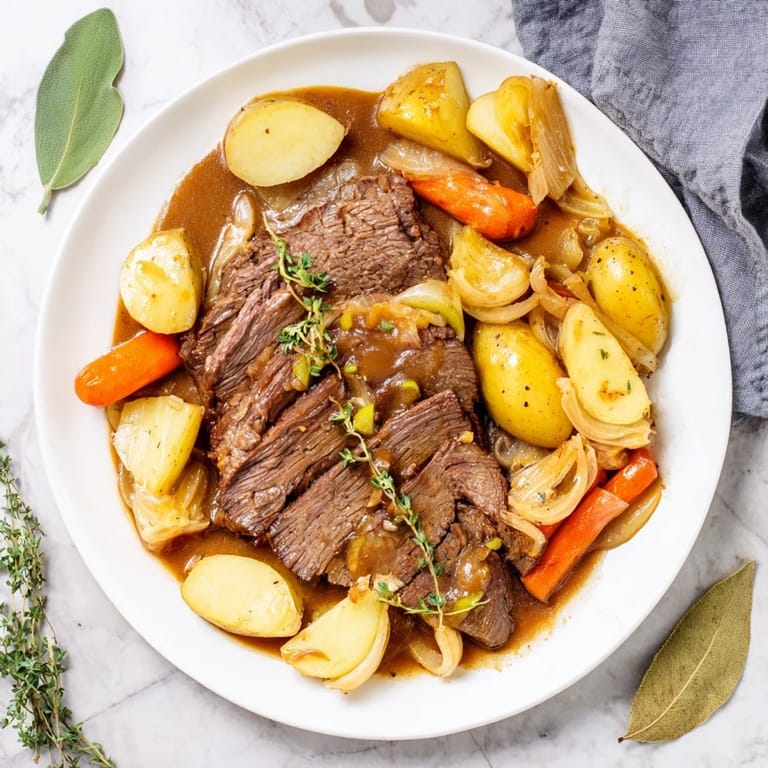
Save The kitchen smelled incredible that rainy Sunday, with the windows fogged up and that deep, savory aroma filling every corner. My grandmother used to say pot roast was patience you could eat, and standing there watching the Dutch oven bubble away, I finally understood what she meant. Something magical happens when beef and vegetables surrender to slow heat together. This recipe became my go-to the winter after college when I discovered how little effort actually went into something so impressive.
I remember serving this at my first dinner party, nervous about timing everything perfectly. The moment I set that platter on the table and saw everyone's eyes light up, all the anxiety melted away. My friend Sarah actually asked for seconds before anyone else had finished their first helping. Now it's the request I get most often when cold weather hits the forecast.
Ingredients
- Chuck roast: This cut has beautiful marbling that breaks down during braising, creating melt-in-your-mouth tenderness and incredible flavor
- Kosher salt and black pepper: A generous seasoning before searing builds the foundation of flavor throughout the entire dish
- Olive oil: Needed for that perfect golden brown sear that creates depth and complexity in the final gravy
- Yukon Gold or Russet potatoes: These hold their shape beautifully during long cooking while becoming creamy inside
- Carrots: They develop natural sweetness as they braise, balancing the rich savory elements of the dish
- Yellow onions: Essential for building the aromatic base and adding subtle sweetness to the gravy
- Garlic: Smashed cloves infuse the cooking liquid with mellow garlic flavor without overpowering
- Beef broth: The backbone liquid that becomes the most incredible gravy you've ever tasted
- Dry red wine: Adds acidity and complexity but can be swapped for more broth if needed
- Tomato paste: Concentrates the flavors and adds beautiful rich color to the sauce
- Worcestershire sauce: That secret umami bomb that makes people ask what's in this
- Thyme and bay leaves: Classic herbs that complement beef perfectly without competing
- All-purpose flour or cornstarch: The key to transforming the cooking liquid into velvety gravy
Tired of Takeout? 🥡
Get 10 meals you can make faster than delivery arrives. Seriously.
One email. No spam. Unsubscribe anytime.
Instructions
- Get your oven ready:
- Preheat to 300°F with the rack in the center position
- Prep the beef:
- Pat the roast thoroughly dry with paper towels, then season generously on all sides with salt and pepper
- Create the flavor base:
- Heat oil in your Dutch oven over medium-high heat and sear the roast 4 to 5 minutes per side until deeply browned, then remove to a plate
- Build the aromatics:
- Add onions and garlic to the pot, cooking 2 to 3 minutes until fragrant, then stir in tomato paste for 1 minute
- Deglaze and assemble:
- Pour in the wine and scrape up all those delicious browned bits, then return the beef and add broth, Worcestershire, thyme, and bay leaves
- Add the vegetables:
- Arrange potatoes and carrots around the roast, making sure they're partially submerged in the liquid
- Braise to perfection:
- Cover tightly and transfer to the oven, cooking 3 to 3.5 hours until the beef forks apart easily
- Make the gravy:
- Remove beef and vegetables, skim excess fat, whisk flour and water until smooth, stir into the pot and simmer 3 to 5 minutes until thickened
 Save
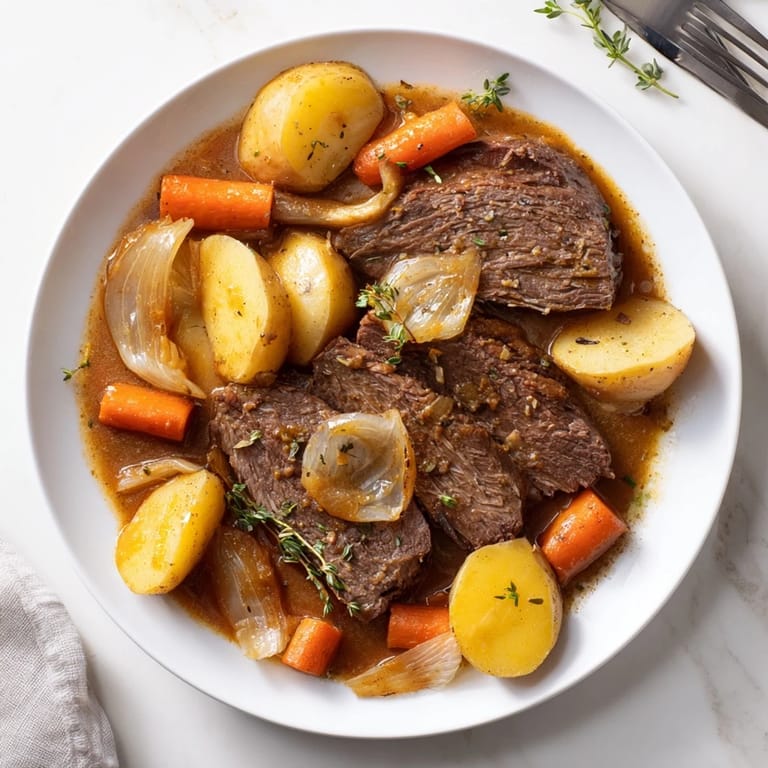
Save There's something almost meditative about the long, slow cook time. I've learned to use those hours for house projects or reading, with that wonderful smell building anticipation. The best part is lifting that lid and seeing how everything has transformed into something greater than the sum of its parts.
Making It Your Own
After making this countless times, I've discovered that adding parsnips or celery root brings wonderful earthy sweetness. Sometimes I throw in fresh rosemary instead of thyme for a slightly different vibe. The beauty of pot roast is how forgiving it is, embracing whatever vegetables you have on hand.
The Leftover Situation
Leftover pot roast might be better than the first night, especially when piled onto crusty bread with extra gravy for the most incredible sandwich. I've been known to make a double batch just for this reason. The flavors meld and intensify overnight in the fridge.
Serving Suggestions
A simple green salad with bright vinaigrette cuts through the richness beautifully. Crusty bread is non-negotiable for sopping up every drop of that gravy. For a complete Sunday dinner experience, a glass of the same red wine you used in cooking ties everything together.
- Let the meat rest 10 minutes before slicing for the most tender results
- Make extra gravy because there's never enough
- This recipe freezes beautifully for future comfort food emergencies
 Save
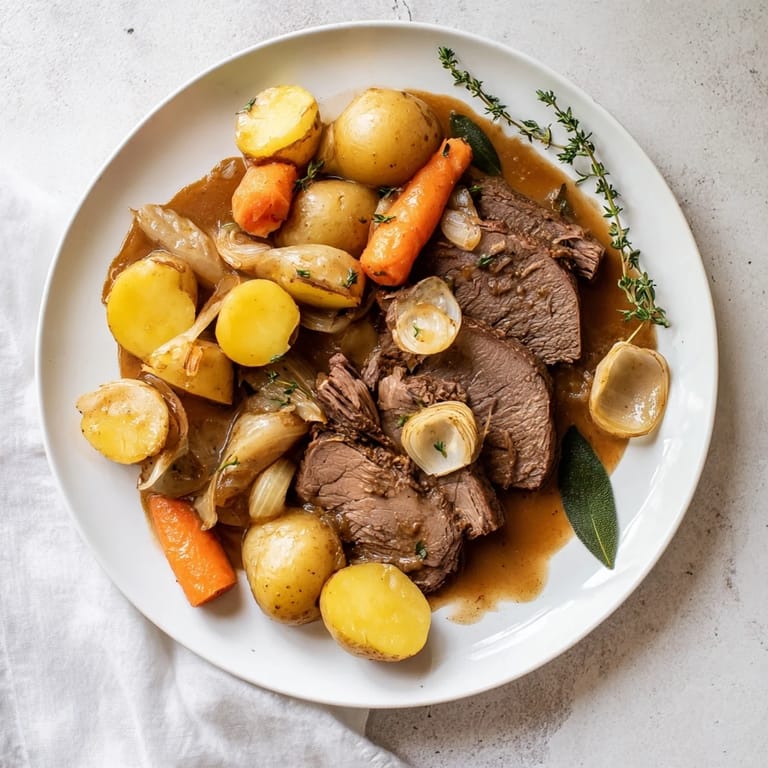
Save There's pure comfort in a dish that rewards patience so generously. Every time I make this, I'm reminded that some of the best things really do take time.
Recipe Questions & Answers
- → What cut of beef works best for pot roast?
Chuck roast is ideal because it has abundant connective tissue that breaks down during slow cooking, becoming tender and flavorful while adding body to the gravy.
- → Can I make this in a slow cooker instead?
Absolutely. Sear the beef first, then transfer everything to your slow cooker and cook on low for 8-10 hours or on high for 4-6 hours until fork-tender.
- → What vegetables pair well with pot roast?
Beyond the classic potatoes and carrots, try adding parsnips, celery root, turnips, or pearl onions during the last hour of cooking for extra depth and variety.
- → How do I know when the roast is done?
Insert a fork into the thickest part of the meat. When it slides in easily with no resistance and the beef shreds naturally, it's perfectly tender and ready to serve.
- → Can I make this ahead of time?
Pot roast actually tastes better the next day as flavors deepen. Cool completely, refrigerate, then reheat gently on the stovetop, adding a splash of broth if the gravy thickens too much.
- → What can I substitute for red wine?
Additional beef broth works perfectly well. For a similar acidity without alcohol, try balsamic vinegar or grape juice in smaller amounts to maintain the gravy's balance.