 Save
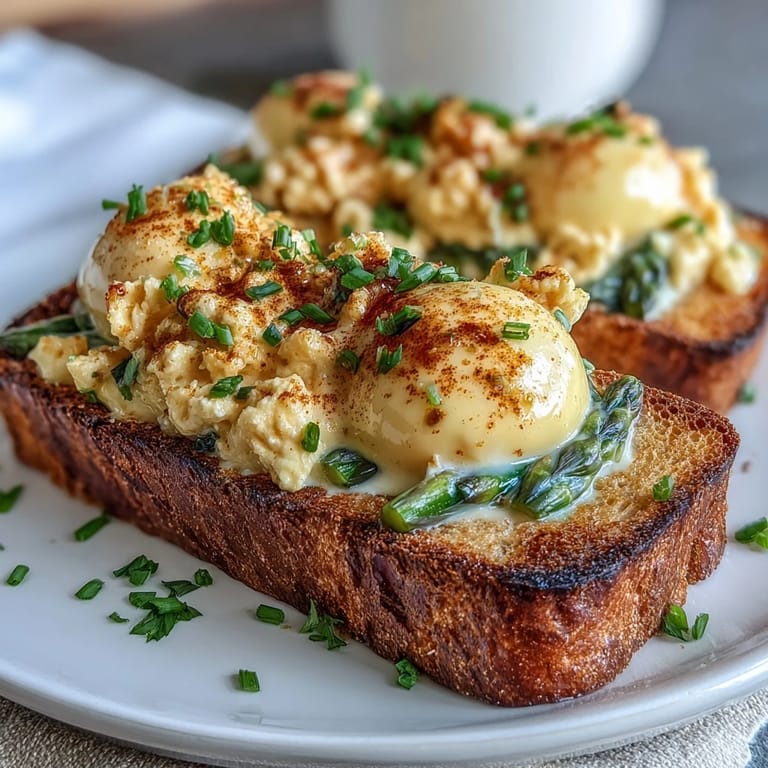
Save My neighbor burst through the kitchen door one April morning with a handful of asparagus from her garden, insisting I do something interesting with it before it got woody. I had eggs, bread, and a block of crème fraîche languishing in the fridge, so we improvised together—and what emerged was this tartine, a simple open-faced sandwich that somehow tastes like springtime on a plate. There's something about the combination of creamy scrambled eggs with bright asparagus that makes you feel like you're eating something both indulgent and virtuous at the same time. It became our go-to brunch move, the kind of thing you can pull together in under 30 minutes and still feel accomplished.
There was a Saturday when I made these for friends who showed up unannounced around noon, and they kept asking if I'd made everything that morning, genuinely shocked it was that fresh and elegant. One friend kept saying it felt like being at a little Parisian bistro, except in my slightly chaotic kitchen with the radio playing too loud. That moment stuck with me—how something so straightforward could feel like a small luxury, like you'd actually planned something special when really you were just hungry.
Ingredients
- Asparagus spears (12 thin ones): Thin spears cook faster and stay tender all the way through, unlike thick ones that get stringy; look for ones that snap when you bend them slightly.
- Eggs (4 large): Room temperature eggs scramble more evenly and gently than cold ones straight from the fridge.
- Crème fraîche or Greek yogurt (2 tablespoons): This is what makes the eggs creamy and luxurious without making them greasy; fold it in right after cooking so it softens everything.
- Unsalted butter (2 tablespoons): This amount melts quietly without browning, giving you a clean base for the shallots and eggs.
- Rustic bread or sourdough (4 thick slices): Sturdy bread is essential—delicate toast will get soggy instantly, so choose something with real structure that can hold the eggs.
- Fresh chives (1 tablespoon plus garnish): Chives add an oniony brightness that plays beautifully with lemon; snip them just before using so they don't bruise and turn dark.
- Lemon zest and juice: These are the secret to making everything taste fresher and more alive, especially against the richness of eggs and butter.
- Salt and black pepper: Taste as you go because the eggs will continue to cook slightly even off the heat, so under-season just a touch.
Tired of Takeout? 🥡
Get 10 meals you can make faster than delivery arrives. Seriously.
One email. No spam. Unsubscribe anytime.
Instructions
- Blanch the asparagus until just tender-crisp:
- Bring salted water to a rolling boil, add the asparagus, and watch it carefully—after 2 to 3 minutes it should bend easily but still have a little snap. Plunge it into ice water immediately to stop it from cooking further, then pat completely dry so it doesn't make your eggs watery.
- Toast the bread until golden:
- You want it crisp and crackly on the outside but still slightly yielding inside, not hard as a rock. This usually takes 3 to 4 minutes in a toaster or under a broiler, but watch closely because it goes from perfect to burnt in seconds.
- Build the flavor base with shallots:
- Melt butter over medium heat and sauté the chopped shallot until it softens and loses its raw bite, about a minute or two. You'll smell that sweet, mellow onion aroma—that's when you know it's ready for the eggs.
- Gently scramble the eggs into creamy clouds:
- Crack and lightly whisk the eggs, then pour them into the warm pan with the shallots and stir constantly but slowly, letting them cook gently rather than aggressively. Remove from heat when they're just barely set but still glossy and soft, then fold in the crème fraîche, chives, lemon zest, and seasoning—the residual heat will finish them perfectly.
- Assemble on warm toast:
- Spoon the creamy eggs generously onto each toasted slice while everything is still warm, so the eggs warm the bread slightly.
- Top with asparagus and final touches:
- Arrange 3 spears on each tartine, drizzle with fresh lemon juice, and scatter a few more chives and a crack of black pepper on top. Serve right away before the toast loses its crisp.
 Save
Save I made these for my mom the day she said she missed having leisurely weekend breakfasts, and watching her face when she took that first bite reminded me that food is really just an excuse to slow down together. Since then, it's become our shorthand for "let's not rush today."
The Magic of Blanching
I used to throw raw asparagus straight into dishes and wonder why it was always tough or fibrous, until someone explained that a quick blanch followed by an ice bath sets the texture and brightens the color while keeping it tender. Now I blanch almost all my spring vegetables before adding them to finished dishes—it's become one of those small techniques that changes everything. The ice bath is not optional; it stops the cooking instantly and locks in that perfect tender-crisp moment.
Seasoning at Every Stage
It's tempting to wait until the very end to season, but I learned that adding salt to the blanching water, a pinch to the shallots as they sauté, and then tasting before the final fold makes the flavors feel woven through rather than sprinkled on top. The lemon zest especially should go in while the eggs are still warm so it releases its oils and infuses everything. This layered approach is what makes something simple taste sophisticated.
Variations and Swap-Ins
Once you understand how this comes together, you can play with it endlessly—swap the chives for fresh dill or tarragon, add a handful of arugula or microgreens on top, or crumble some goat cheese or grated Parmesan over the eggs before plating. On mornings when I'm feeling indulgent, I'll add a thin slice of smoked salmon underneath the eggs. The bread can be any sturdy variety you like, and if you don't have crème fraîche, full-fat Greek yogurt or even a touch of cream works beautifully.
- Try crispy prosciutto torn over the top for a salty contrast.
- Swap the asparagus for blanched broccoli, green beans, or snap peas depending on the season.
- Serve alongside a simple green salad dressed with lemon vinaigrette to round out the meal.
 Save
Save These tartines remind me that the best meals aren't always the complicated ones—they're the ones you make with intention and fresh ingredients, the ones you serve to people you actually want to slow down with. They taste like spring tastes.
Recipe Questions & Answers
- → How do I keep asparagus tender-crisp?
Blanch asparagus in boiling salted water for 2–3 minutes, then immediately transfer to an ice bath to preserve its crisp texture and vibrant color.
- → What’s the best way to cook creamy eggs for the tartines?
Cook eggs gently over medium heat with sautéed shallots, stirring constantly until just set and creamy, then fold in crème fraîche and chives for richness.
- → Which bread types work well for this dish?
Rustic country bread or sourdough slices about ½ inch thick provide a sturdy yet crisp base for the toppings.
- → Can I use different herbs instead of chives?
Yes, fresh dill, tarragon, or parsley make excellent alternatives to chives and complement the flavors beautifully.
- → What additions enhance the flavor profile?
A sprinkle of grated Parmesan or crumbled goat cheese adds depth, and a drizzle of lemon juice brightens the dish just before serving.